Introduction
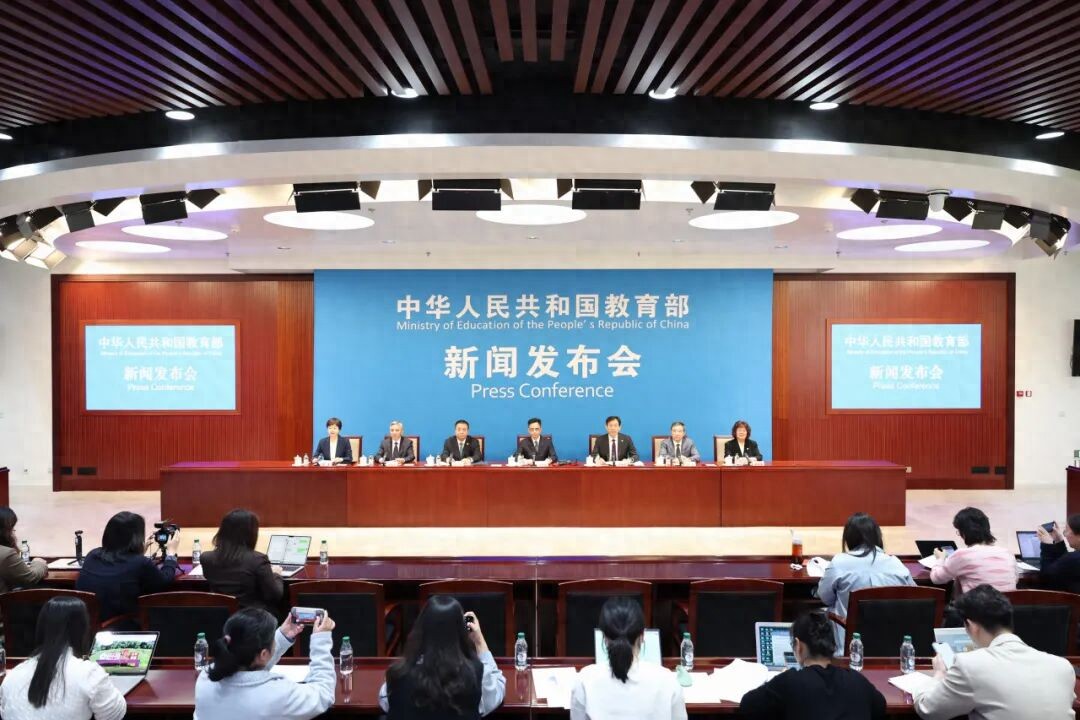
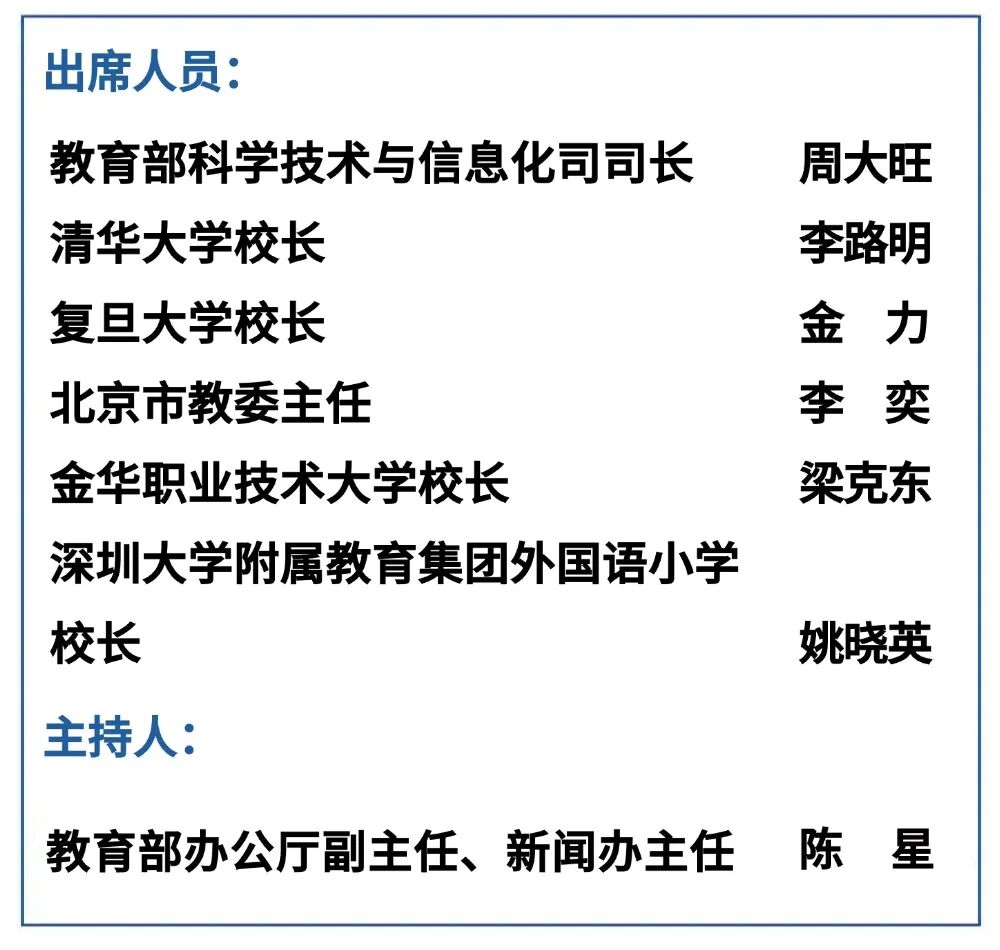
On April 10, the Ministry of Education held a press conference to introduce the ‘AI + Education’ action plan. What are the main contents of this action plan? How will it be implemented? Let’s hear from Zhou Dawang, Director of the Science and Technology and Informatization Department of the Ministry of Education.
Four Key Principles
The central government places great importance on the ‘AI + Education’ initiative. General Secretary Xi Jinping emphasized the need to leverage AI to facilitate educational reform and promote AI education across all levels and society, continuously nurturing high-quality talent.
Currently, AI has become a strategic technology leading a new round of technological revolution and industrial transformation, rapidly enhancing productivity and reshaping production relationships, while posing new requirements for the skill sets of workers. Education serves as the foundational support for modernization. In the face of the significant question of ‘what kind of people to cultivate and how to cultivate them’ in the intelligent era, we have deeply studied and implemented General Secretary Xi Jinping’s important discourses on AI, aligning with national ‘AI +’ action deployment requirements, and fully absorbing local practical experiences to propose an overall approach to advancing ‘AI + Education’.
1. Focus on Student Development
We will thoroughly implement the Party’s educational policies and the fundamental task of fostering virtue through education, adhering to our educational mission. We will combine technological education with humanistic education, aiming to enlighten students’ wisdom and stimulate innovative thinking while also caring for their emotional growth and shaping well-rounded personalities. This will comprehensively enhance students’ core competencies, including critical thinking, creativity, and the ability to solve complex problems.
2. Prioritize Competency Development
We will vigorously promote AI education across all levels and general education for society. Basic education will focus on competency cultivation, higher education will strengthen interdisciplinary studies, vocational education will emphasize skill enhancement, and lifelong education will prioritize knowledge dissemination, helping all students and lifelong learners master AI. We will comprehensively enhance teachers’ AI literacy and stimulate their intrinsic motivation for application and innovation.
3. Application-Oriented Approach
We will address hot issues in education such as personalized learning, reducing teacher workloads, and scientific decision-making by developing a series of forward-looking and transformative application scenarios. We will avoid superficial measures and formalism, consistently promoting construction, optimization, and strengthening through application, facilitating the deep integration of AI into education, and empowering school education, lifelong education, technological innovation, international exchange, teacher development, and educational governance.
4. Promote Ethical AI
We will coordinate development and safety, focusing on teacher and student literacy, tool development, technology research, and ethical safety to formulate AI standards and norms. We will enhance assessments and protections for content safety, technical safety, data safety, algorithm safety, and ethical safety. Additionally, we will prevent AI from exacerbating educational inequalities and promote its application in remote rural areas in central and western China to bridge the digital divide.
Comprehensive Deployment of Four Areas
The action plan consists of six parts, focusing on key tasks for building a strong educational nation during the 14th Five-Year Plan period. It aims to comprehensively deploy talent cultivation, application innovation, foundational environment, and ecological construction for AI in education, seizing strategic opportunities for educational development in the intelligent era, promoting content updates, transforming educational models, and reshaping educational forms to accelerate the establishment of a future-oriented educational system.
1. Strengthen Talent Cultivation and Enhance Competency for All
We will implement targeted measures for different educational stages, ensuring comprehensive AI curriculum coverage in basic education to spark curiosity and foster innovative thinking. In higher education, we will integrate AI into public foundational courses, promoting interdisciplinary integration and optimizing academic layouts to cultivate high-quality talent needed in the intelligent era. In vocational education, we will push for the intelligent upgrade of traditional industry-related majors to train high-skilled talent adapted to industrial transformation. In lifelong education, we will develop quality learning resources for various groups, ensuring equal access to AI learning opportunities, utilizing flexible methods like micro-courses to help learners update their knowledge and skills for quality employment.
2. Promote Comprehensive Integration of AI and Education
We will focus on problem-oriented and scenario-driven approaches to promote the integration of AI across all educational elements and processes. In student learning, we will develop intelligent companions to support comprehensive development, emphasizing online ideological education and personalized learning to promote equitable and inclusive education. In teacher instruction, we will develop intelligent teaching systems to support all teaching phases, effectively reducing teacher workloads. For school governance, we will build an educational intelligent brain focusing on scenarios like government services, exam evaluation, employment services, campus safety, and resource allocation to support convenient services, precise management, and scientific decision-making. In scientific research, we will establish intelligent research entities and experimental clusters in natural sciences, engineering sciences, and philosophy and social sciences to explore AI-driven changes in research paradigms.
3. Strengthen the Foundational Environment for AI + Education
We will emphasize collaborative efforts between proactive government and effective market forces to ensure high-quality development of ‘AI + Education’. At the foundational level, we will concentrate on construction to avoid inefficient and repetitive investments, with the state leading the establishment of educational intelligent computing service platforms and research databases, developing specialized large models for education to provide integrated support of high-quality computing power, data, models, and intelligent tools for all types of schools. At the application level, we will enhance multi-party collaboration to build a vibrant and healthy ecosystem, encouraging co-creation in the ‘Qiwuy Learning Community’, accelerating application cultivation through pilot bases, expanding quality service supply via the national smart education platform, and establishing capability assessment systems to create exemplary application scenarios. At the terminal level, we will adopt localized approaches and targeted measures to promote environmental construction, creating future classrooms, schools, learning centers, and training centers, popularizing digital textbooks, smart MOOCs, and intelligent terminals to bridge the ’last mile’ of application.
4. Optimize the Development Ecosystem of AI + Education
We will drive innovation through reform and enhance vitality through innovation, promoting comprehensive innovation in systems and mechanisms. In educational technology, we will strengthen breakthroughs in frontier theories and core technologies, promoting interdisciplinary innovation in education and transforming advanced technologies into high-quality educational intelligent products through collaborative innovation mechanisms involving government, industry, academia, research, and finance. In terms of support conditions, we will improve policies, standards, and norms, strengthen team building, and innovate investment models to create a support system compatible with the characteristics of AI development. In international cooperation, we will create a series of diplomatic brands and multilateral exchange platforms, promoting quality courses, advanced technologies, and Chinese standards abroad. In security assurance, we will continuously conduct social experiments on AI, regulate the management of intelligent products in schools, and effectively prevent issues like forgery, fraud, academic dishonesty, examination pressure, and privacy breaches, firmly maintaining the bottom line of safe development.
Four Key Measures to Ensure Effective Implementation
1. Coordinate and Integrate Efforts
The ‘AI + Education’ initiative is a priority project. We will establish a work structure led by key responsible individuals to ensure practical implementation, broaden innovation, streamline mechanisms, and strengthen safety. We will also establish a regular consultation mechanism among multiple departments to collaboratively tackle key, difficult, and bottleneck issues, forming a concerted effort.
2. Promote Pilot Demonstrations
We will implement pilot projects that empower education with AI, stimulating grassroots innovation and exploring effective pathways to form replicable and promotable typical experiences. We will organize AI application demonstration projects to create high-value, large-scale, and transformative scenarios, addressing major challenges with small-scale solutions and setting a benchmark for the development of ‘AI + Education’.
3. Strategically Plan Projects
In collaboration with the National Development and Reform Commission, we will utilize central budget investments and other funds to plan the construction of national educational intelligent computing service platforms, AI (education) application pilot bases, and interdisciplinary innovation platforms, strengthening the foundational development. We will guide localities and schools to increase investment and proactively deploy new infrastructure to create future-oriented educational spaces.
4. Strengthen International Cooperation
We will successfully host the World Digital Education Conference to promote China’s concepts and solutions for ‘AI + Education’. We will enhance the construction of an AI open alliance, promoting public products and Chinese standards abroad. We will deepen cooperation with UNESCO and actively participate in the international agenda, rule-making, and standard-setting in the field of AI education, continuously enhancing the international influence of China’s ‘AI + Education’ initiative.
Comments
Discussion is powered by Giscus (GitHub Discussions). Add
repo,repoID,category, andcategoryIDunder[params.comments.giscus]inhugo.tomlusing the values from the Giscus setup tool.